

The basic structure of RFID
RFID (Radio Frequency Identification) is a wireless communication technology used to automatically identify and track objects over short distances. It consists of tags, readers, and backend systems, forming the basic structure of RFID.
1. Tag
RFID tags are one of the most critical components in RFID systems. It usually consists of a chip, antenna, and casing. The chip stores information about objects, such as unique identifiers, manufacturer information, etc. Antennas are used to receive and transmit radio frequency signals. The outer shell serves to protect and secure the label. RFID tags can be divided into active tags and passive tags. The active tag is equipped with a battery inside, which can actively send RF signals and is usually used for real-time monitoring and positioning of objects. The passive tag does not have a built-in battery and is powered by the RF signal sent by the reader and returns the information inside the tag.
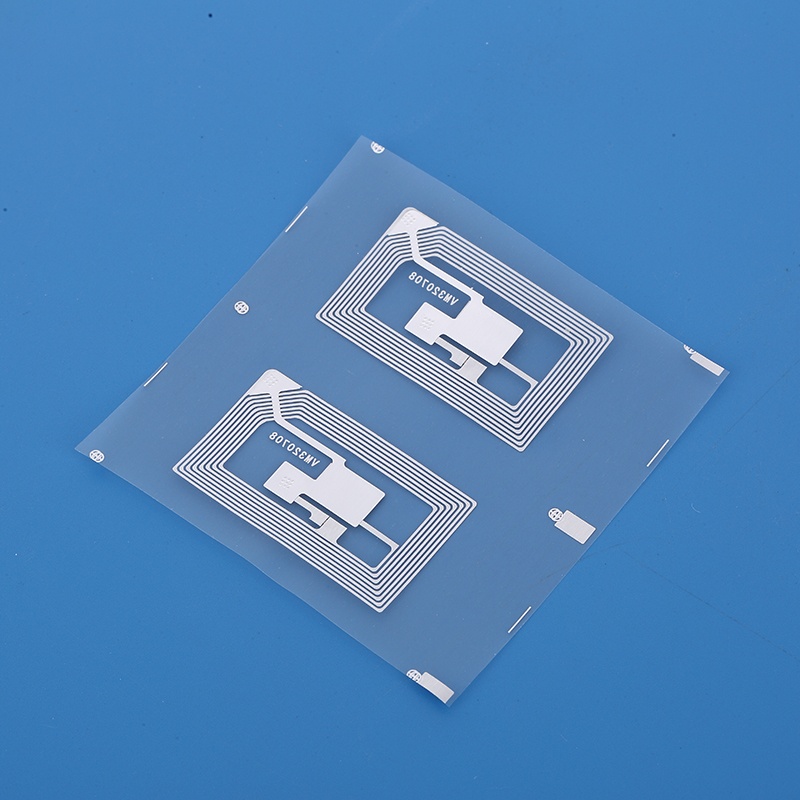
2. Reader and writer
RFID reader is a device used for communicating with tags. It activates tags by transmitting radio frequency signals and receives information returned by the tags. Readers and writers typically consist of RF modules, control units, and external interfaces. The RF module is responsible for transmitting RF signals and receiving signals returned by tags. The control unit is responsible for processing the received signals and communicating with external systems. External interfaces are used for data exchange with other devices, such as connecting to a computer or server.

3. Backend system
The backend system is the core part of RFID applications. It is responsible for receiving and processing label information obtained from readers and writers, as well as interacting and processing data with other systems. Backend systems typically include databases, applications, and network communication modules. The database is used to store and manage label information and related data. Applications are used to process and analyze label information, such as logistics tracking, inventory management, etc. The network communication module is used for data exchange with other systems, such as integration with the enterprise’s ERP system.

4. Working principle
The working principle of RFID system is as follows:
-The reader emits radio frequency signals to activate nearby tags.
-After the activated tag receives the RF signal, it is powered by the energy received through the antenna.
-The tag returns the stored information to the reader, which then decodes and processes the received information.
-The reader transmits the decoded information to the backend system for processing and analysis.
-The backend system performs corresponding operations based on the received information, such as updating the database, generating reports, etc.
5. Application areas
RFID technology has a wide range of application areas, including logistics management, supply chain management, intelligent transportation, intelligent warehousing, healthcare, and so on. In logistics management, RFID technology can achieve real-time tracking and positioning of goods, improving logistics efficiency and accuracy. In intelligent transportation, RFID technology can be used for electronic toll collection, vehicle recognition, and traffic monitoring. In the field of healthcare, RFID technology can be used for medical device management, patient identification, and drug traceability.
The basic structure of RFID includes tags, readers, and backend systems, which achieve automatic recognition and tracking of objects through wireless communication. Its application in various fields is becoming increasingly widespread, bringing convenience and benefits to logistics management, supply chain management, intelligent transportation, and healthcare. With the continuous development and innovation of technology, RFID technology will play an important role in more fields.
Related Products