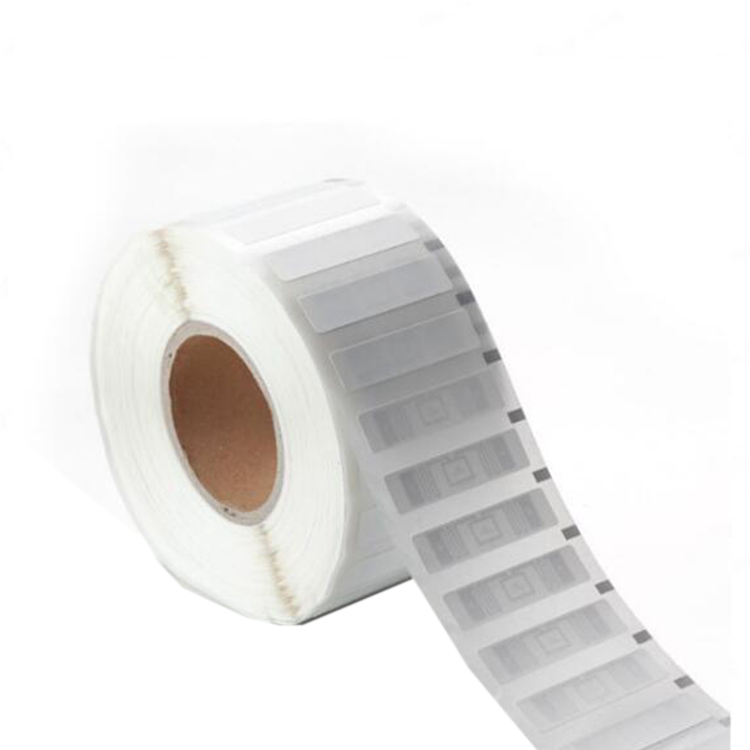

RFID (Radio Frequency Identification) is a radio frequency identification technology that enables tracking, management, and control of objects by pasting electronic tags onto them. In practical applications, it is very important to correctly attach RFID tags.

Choose the appropriate RFID tag
Before attaching RFID tags, the first step is to select the appropriate tag from multiple types. Choose a label that is suitable for your application scenario based on factors such as the size, material, and operating frequency of the label. For example, if you need to stick it on a metal object, you need to choose a label with a metal isolation layer. At the same time, it is also necessary to consider factors such as the reading and writing distance, durability, and waterproof performance of the label. When selecting tags, make decisions based on your specific needs and application environment.
Choose the appropriate labeling location
Firstly, selecting the appropriate labeling location is crucial to ensuring the proper functioning of RFID tags. Common labeling positions include the front, back, and side of goods or packages. The selection of specific labeling locations needs to be determined based on the properties of the goods or packages. If the goods or packages are made of paper, sticking them on the front is the best choice because paper has less interference with radio frequency signals. If the goods or packages are made of metal, it is better to stick them on the back or side to avoid interference of metal on RF signals.
Test the effect of label pasting
After completing the labeling, testing should be conducted to verify the effectiveness of the label. RFID readers can be used to test the reading of tags and ensure that they can be recognized properly. At the same time, vibration and temperature tests can also be conducted on the labeled object to ensure that the label can be stably attached to the object for a long time.
Avoid label overlap
During the labeling process, it is also important to avoid label overlap. Overlapping RFID tags can interfere with each other, reduce reading efficiency, and even lead to data errors. Therefore, when labeling, it is necessary to ensure sufficient spacing between labels to avoid label overlap. Adhering to the labeling requirements provided by the supplier and operating according to the specifications of the logistics management system can effectively avoid label overlap issues.
Regularly check label status
It is also essential to check the label status in a timely manner after labeling. Regularly check the adhesive performance and readability of the labels, and perform necessary maintenance and replacement. If the tag is found to be detached, damaged, or unable to be read properly, it is necessary to replace it with a new RFID tag in a timely manner.
Proper labeling of RFID tags is an important step in ensuring the functionality of the tags. By selecting appropriate tags, preparing labeling materials, selecting appropriate fitting positions, correctly fitting tags, and testing the effectiveness of tag pasting, the long-term stable operation of the tags can be ensured. If you need to purchase RFID tags or learn more about RFID technology, please feel free to consult us. We provide various types of RFID tags and solutions to meet the needs of different industries and scenarios.
Related Products