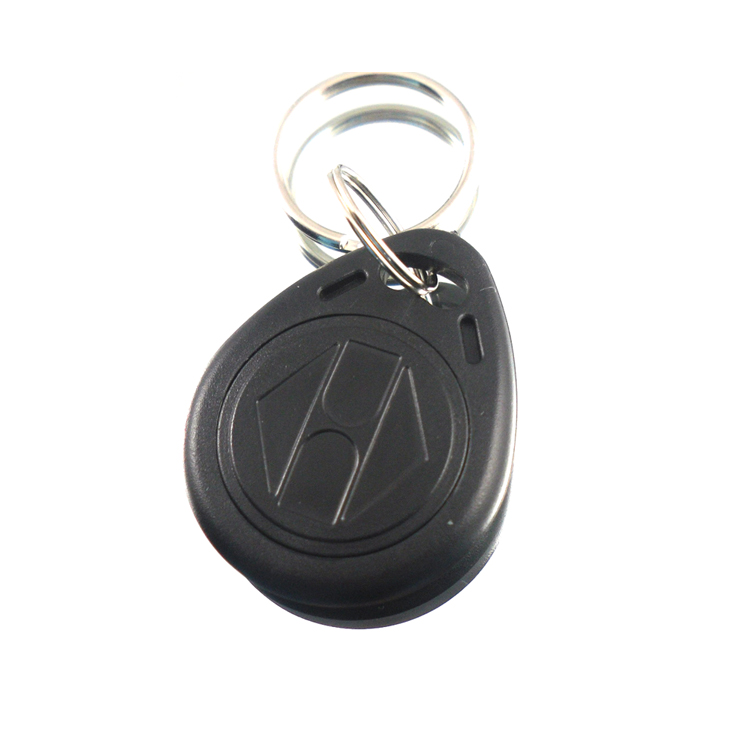

RFID keys usually refer to electronic keys that use RFID (Radio Frequency Identification) technology. Unlike traditional keys that we commonly use, RFID keys do not need to be inserted or rotated for door lock opening and closing operations. RFID keys are small sensing devices that are embedded with RFID chips and micro antennas inside the keys. They can communicate with the door lock in a non-contact manner through wireless radio frequency signals, achieving fast door opening and closing operations.
The working principle of RFID keys is to receive and send radio frequency signals through wireless radio frequency identification, thereby achieving the function of contactless unlocking or locking the door. When the user holds a key with RFID close to the door lock, the door lock system will detect the RFID key, read the unique identification number stored on the RFID chip, and determine whether the key is authorized. The door lock system will compare the identification number with the pre-set permission, If the permissions meet the requirements, the door lock will unlock and allow the user to enter. If the permissions do not match, the door lock will remain locked, greatly improving the security of the door lock.
Compared to traditional physical keys, RFID keys have the following advantages:
1. Convenience: RFID keys do not need to be inserted or rotated. The key only needs to be close to the door lock recognition range to achieve unlocking operation. Compared with traditional manual insertion or manual recognition methods, RFID keys have more advantages and provide a more convenient user experience, allowing users to quickly enter and exit.
2. Security: The unique identification number of RFID keys ensures high security. The key chip stores the RFID unique identification code and user information (user name, building, etc.), which can be compiled by management personnel. Only authorized keys can communicate with the door lock. Unauthorized keys cannot communicate with access control. After authorized keys communicate with the door lock, the door lock will automatically open, The RFID access control system provides a more reliable and secure access control method, as authorized keys are unable to interact with the door lock at the same time, making it impossible to open the door lock.
3. Programmability: The permissions of RFID keys can be flexibly programmed and managed, and administrators can authorize or revoke different keys as needed through RFID readers, facilitating the management and adjustment of permissions, and being flexible.
4. Data recording: Traditional locks are not known even if they are opened or stolen. If smart locks are violently dismantled, they will immediately sound an alarm in the background. The usage records of RFID keys can be saved and tracked, and administrators can view relevant data at any time through the backend system, such as entry and exit records and time, which facilitates security auditing and entry and exit monitoring management, greatly reducing time and labor costs and reflecting intelligence, Enable users to have a better experience.
RFID keys are widely used in various places and fields, such as office buildings, hotels, apartments, parking lots, etc., providing a more intelligent, secure, and convenient access control method.
With the development of the times, smart locks have gradually entered people’s lives and are widely used in enterprises, households, and public institutions. Compared to traditional locks, smart electronic locks are not only safer, but also more convenient and fast. An electronic lock is an electronic device that attaches an integrated circuit chip to the lock body. Its main function is to store information about visitors within a certain range. When someone presses the doorbell on the device, the controller transmits data to the system center computer, which can be used to determine whether visitors have entered. Intelligent electronic locks have multiple functions. In addition to basic unlocking functions, it also has functions such as security monitoring, identity recognition, location tracking, and information recording.
Related Products