


With the advancement of digital agriculture in our country, many animal husbandry farms have taken the fast train of the digital economy. Previously, manual real-time inspection of animal activity status and regular statistics of feeding data were required. Now, with just a touch of the user terminal, the desired content can be remotely viewed; And as the data center and network center land on the ranch, by laying out various RFID livestock breeding management equipment and other sensor monitoring devices, managers can easily view the required data and scientifically execute the center’s work and key tasks in the command and dispatch center and big data management center, which is convenient and efficient.
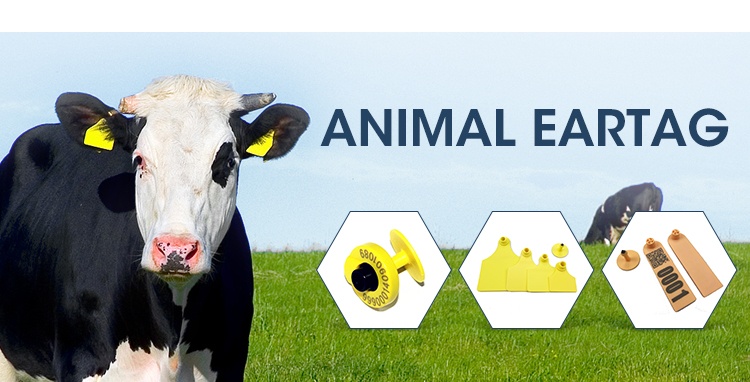
The RFID livestock breeding management recognition equipment, on the other hand, identifies individuals by reading the RFID electronic ear tags of animal identities, and measures and records the individuals. When applied in a fully automatic pig breeding measurement system, it can effectively select ideal breeding pigs; Used in fully automatic feeding systems, it can achieve precise individual feeding of group sows, etc; Used in the fully automatic weighing and stabilization system for cattle, it can achieve automatic input of individual stabilization data for cattle.
1、 Precision breeding
In traditional farm management, raising livestock and poultry is often a tedious and imprecise task. After the introduction of RFID technology, each animal can carry an RFID tag, recording their individual information. Through RFID readers, farmers can real-time understand the feeding situation of each animal, including feed intake, growth rate, health status, etc. Through these data, farmers can develop more scientific feeding plans, achieve precise feeding, and improve breeding efficiency.
2、 Automated management
The introduction of RFID technology has made farm management more automated. Various devices and tools on the farm can be equipped with RFID tags to achieve Internet of Things connectivity. For example, agricultural vehicles and machinery can be intelligently scheduled through RFID technology to improve the efficiency of internal transportation and production on the farm. Farmers can remotely monitor the status of equipment through the central management system, perform timely maintenance and upkeep, and reduce production losses caused by equipment failures.
3、 Epidemic prevention and control
Animal and plant diseases are a major challenge in farm management. RFID technology provides strong support for disease prevention and control. Each animal and crop can carry unique RFID tags to record their growth process and health status. Once abnormal conditions are found in animals and plants, farmers can quickly locate the problem area through RFID systems, take timely isolation measures, and prevent the spread of diseases. In addition, RFID technology can also be used to trace the production process of agricultural products, help trace infected animals and plants, and take timely measures to curb the spread of the epidemic.
4、 Production efficiency improvement
The application of RFID technology not only helps to improve individual tasks, but also optimizes the operation process of the entire farm by integrating data, thereby improving production efficiency. By collecting and analyzing data on the growth environment, feeding process, picking, planting, and other aspects of animals and plants, farmers can have a more comprehensive and scientific understanding of the entire production process. Based on these data, farmers can make more precise decisions and improve the overall efficiency of agricultural production.
5、 Resource management and environmental monitoring
RFID technology can also be applied to resource management and environmental monitoring in farms. By installing RFID tags on water sources, soil, and meteorological equipment, real-time monitoring of water quality, soil moisture, meteorological changes, and other information can be achieved. This monitoring system helps to scientifically and reasonably utilize water resources, accurately fertilize, and improve the yield of farmland. Meanwhile, RFID technology can also assist farmers in monitoring climate change at any time, preparing for disaster prevention in advance, and reducing production risks caused by natural disasters.
However, with the continuous advancement of technology, these problems are expected to be gradually solved. In the future, the application of RFID technology in farm management will be more widespread. With the cost reduction of RFID technology, more farms will be able to enjoy the many benefits it brings. Meanwhile, with the development of technologies such as artificial intelligence and big data, RFID systems will become more intelligent, providing more precise and efficient management methods for agriculture.
Related Products

