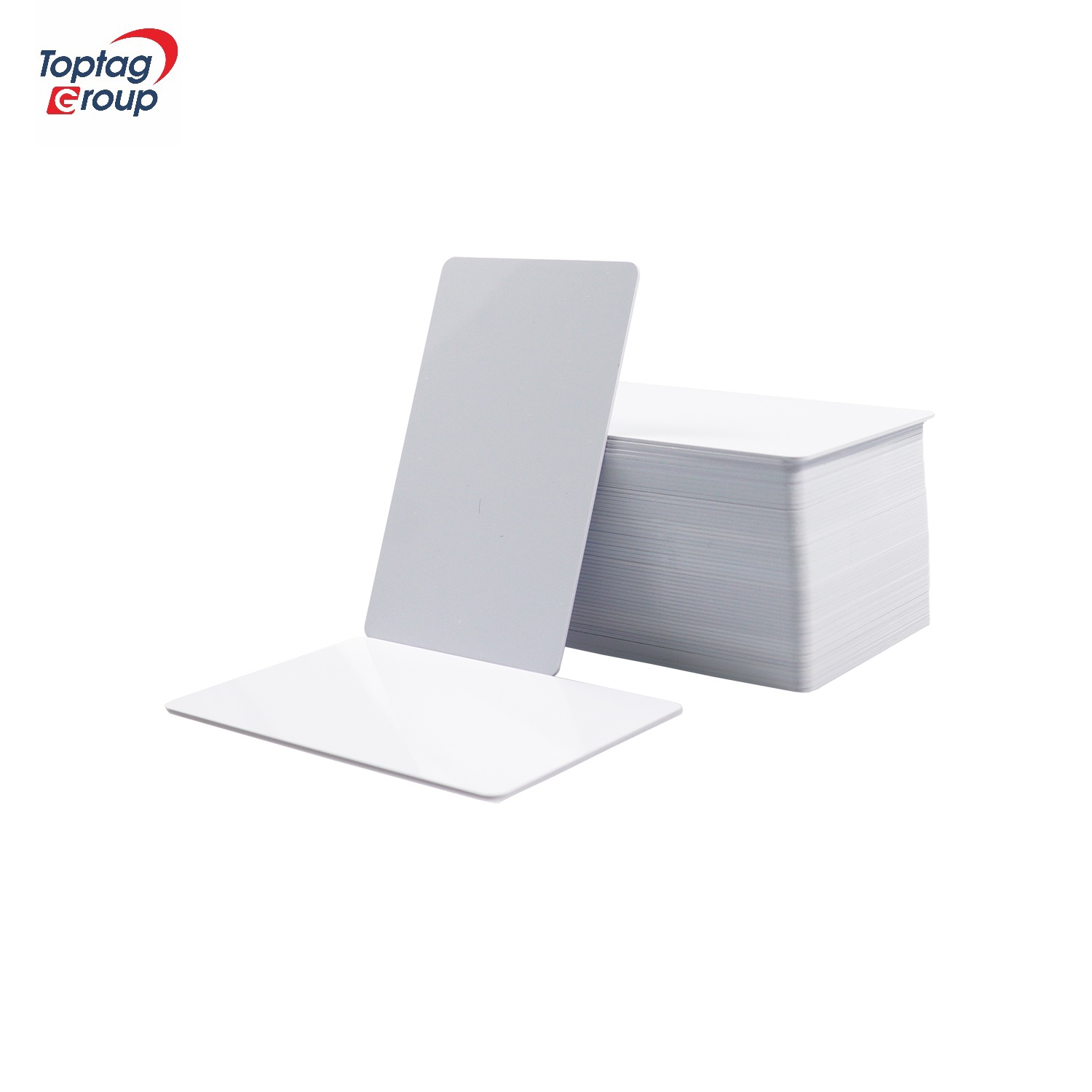

Sistemul de carduri cu circuit integrat și sistemul de carduri de identificare sunt două tipuri diferite de sisteme de carduri, cu unele diferențe în ceea ce privește funcționalitatea, securitatea și utilizarea.
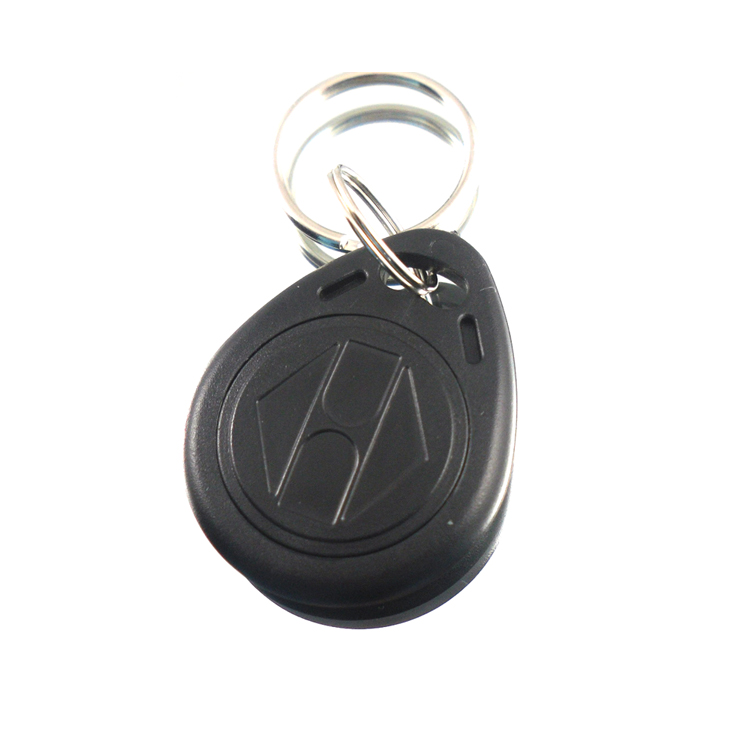
IC keychains are widely used in public transportation and access control systems. The outer shell is made of refined molds and advanced anti-corrosion and high-temperature resistant materials, with RF card chips encapsulated inside. They are filled with epoxy resin and combined through ultrasonic welding.
The ID card is a read-only non-contact IC card that relies on a card reader to sense power and read the unique card number stored in the chip EEPROM. The card number is written once before the card is sealed and cannot be changed after the card is sealed. Passive and contactless are the two most prominent features of this chip, and the RF interface circuit is the key core technology. It receives RF energy from the card reader, generates power and clock for the chip, and uses technologies such as phase shift keying and load amplitude modulation to achieve wireless communication between the card and the reader. The non-contact ID card has The outstanding advantages of convenient, fast, and reliable operation have been widely applied.
1. Security:
The security of IC cards is much greater than that of ID cards. The card number in the ID card can be read without any permission, making it easy to replicate. The reading and writing of data recorded in the IC card require corresponding password authentication, and even each area in the card has different password protection to comprehensively protect data security. The password for writing and reading data on the IC card can be set differently, providing a good hierarchical management method to ensure system security.
2. Recordability:
The ID card cannot be written into data, and its recorded content (card number) can only be written in by the chip manufacturer at once. Developers can only read the card number for use, and cannot develop new number management systems based on the actual needs of the system. The IC card can not only be read by authorized users, but also written by authorized users (such as new card numbers, user permissions, user information, etc.), and the recorded content of the IC card can be repeatedly erased.
3. Storage capacity:
The ID card only records the card number; And IC cards (such as Philips mifare1 cards) can record content of about 1000 characters.
4. Offline and networked operation:
Due to the lack of content in the ID card, the permissions and system functions of the card holder rely entirely on the support of the computer network platform database. The IC card itself has already recorded a large amount of user related content (card number, user information, permissions, consumption balance, and other information), which can be completely detached from the computer platform to achieve automatic conversion between networking and offline operation, and can meet the needs of large-scale use and less wiring.
5. One Card Extension Application:
Due to the lack of records and partitions, ID cards can only rely on network software to process information from various subsystems, which greatly increases their dependence on the network; If users want to add functional points after the completion of the ID card system, they need to install additional wiring, which not only increases the difficulty of engineering construction, but also increases unnecessary investment. So, using an ID card to build a system is difficult to expand and achieve a true one card system. The IC card storage area is divided into 16 partitions, each with different passwords and multiple independent management functions of subsystems, such as access control in the first partition, consumption in the second partition, employee attendance in the third partition, and so on. Fully realize the purpose of the one card system and achieve a fully modular design. Even if users need to add functional points, they do not need to wiring again. They only need to add hardware and software modules, which facilitates the upgrade and expansion of the IC card system at any time in the future, achieving smooth upgrades and reducing duplicate investments.
6. Maintenance and operation of intelligent systems:
For example, if a computer issues a new user ID card, all ID card numbers must be manually downloaded to each ID card reader controller through the network of the ID card system. Otherwise, the ID card will be treated as an invalid card and cannot be used; To change user permissions, you need to enter the authorized ID card number on each ID card controller. For example, after the system is put into use, it is often necessary to add an ID card. For each new card added or the permission of a certain card modified, the card number must be entered on all available controllers of the card, which greatly increases the workload and time of manual operation and maintenance. In addition, if there are multiple one card subsystems, or if the subsystems are slightly larger, the complexity of system maintenance and management will increase exponentially, which will directly lead to the system not functioning properly.
The one card system using IC cards, after the issuance of the IC card, the card itself is a data information carrier. Even if the communication network is not connected, the read and write controller can still achieve offline read and write card operation. If user permissions are changed, the user’s permissions can be directly written in the IC card. Adding a new user to change permissions only requires modifying the card, without the need to modify various controllers. This technically avoids the problem of managers changing controller card usage permissions everywhere, achieving improved management efficiency and implementation The goal of intelligent management.
7. Cost performance:
Although ID cards and ID card readers are cheaper than IC card cards and readers, in terms of the composition of the entire one card system (wiring cost, structural composition), the prices of the two systems are equivalent, and only the IC card system can operate stably and reliably. Therefore, the cost-effectiveness of the IC card system is much higher than that of the ID card system. Furthermore, considering the current immature hardware environment of various implementation units and the unfamiliarity of system maintenance personnel with computer knowledge, it is impossible to establish or maintain a complete network system to support the 24-hour continuous operation of the ID card one card system. So, the intelligent IC card one card system that meets the mutual adaptation of networking and offline operation is the only choice for today’s users.
8. There are two conclusions about the one card industry:
ID cards cannot be made into one card, and ID cards cannot be used for consumption unless their shortcomings are acceptable. The biggest reason why ID cards cannot be used for consumption is due to credit issues. Due to the lack of a key security authentication mechanism for ID cards and the inability to write cards, consumption data and amounts can only be stored in the computer’s database. Computers are managed by property management personnel, and there is no room for cheating in theory and mechanism. In addition, if consumption data crashes due to computer problems, catastrophic consequences will occur.
Therefore, it is impossible to make consumers agree with the authority (i.e. credit) of ID cards in management. Too many financial disputes can only make the ID card consumption system unusable, especially in public systems such as community management systems. The IC card consumption system, due to its high reliability and unbreakable compliance with the ISO9001 international security certification mechanism, is mainly because the “electronic wallet” or IC card is in the hands of the user, and each consumption amount is “controlled” by the user themselves. Therefore, the IC card consumption system is a highly trustworthy consumption system. Of course, in the networked state, the computer still has data consistent with the user’s IC card, which also achieves dual security data backup for the system.
9. The “strange” phenomenon of using IC cards as ID cards:
Some ID card devices and system manufacturers, due to the strong advantages of IC cards, also claim that their systems can use IC cards, but in fact, just like using ID cards, they only use the card number in the public area of the IC card, without changing the system structure of their ID card, and do not have the key authentication and read/write security mechanism that IC cards possess. So it can be inferred from the essence that it is still an ID card one card system, which is just more wasteful of resources and has more fraud potential compared to traditional ID card systems. Similarly, it cannot have the advantages of an IC card one card system.
Overall, the choice between an IC card system or an ID card system depends on the specific application scenario and requirements. If higher security and complex functions are required, the IC card system may be more suitable; For some simple authentication scenarios, ID card systems may be more cost-effective.
Produse conexe