


Carte de blocare RFID pentru protecție
RFID blocking card protects the credit card from theft scanning when the blocking card is used together. This kind of Blocking Card instantly creates a surrounding electronic field, making all 13.56MHz cards virtually invisible to RFID and NFC scanners.
Features: Keeps your information on cards, such as credit cards, debit cards, driver’s license, identification cards, passports, etc, safe from nearby or remote RFID scanning with the Blocking Card.
Parametrii produsului:
| Material | PVC |
| Card size | 85.5*54*0.9mm |
| weight | 8g |
| imprimare | Imprimare color personalizată Full Color |
| Tipul de blocare RFID | Blocarea câmpului E |
| Frecvența scutului | 13.56MHz |
| Scut interfață RF | ISO14443, ISO15693 |
| Timp de utilizare durabil | 10 ani |
| Protecție | All kinds of cards with 13.56MHz. Such as credit cards, identity cards, driver’s cards, bank cards, debit cards, passports, etc |
| Temperatura de funcționare | -50℃ ~ 85℃ |
| Pachet | Carton size:48*29*20cm GW:16kg |
How to use?

Step 1: Place in the center of the wallet
Step 2: Relax, as you are now protected
(No battery required)
Note: The electronic field produced by the Blocking Card has a limited effective range.
For best protection, place the Blocking Card directly in front (or back/middle) of your credit and debit cards(As pictured onthe left). Certain wallet layouts may require 2 Blocking Cards to ensure the highest coverage of protection.
Why use an RFID blocking card?
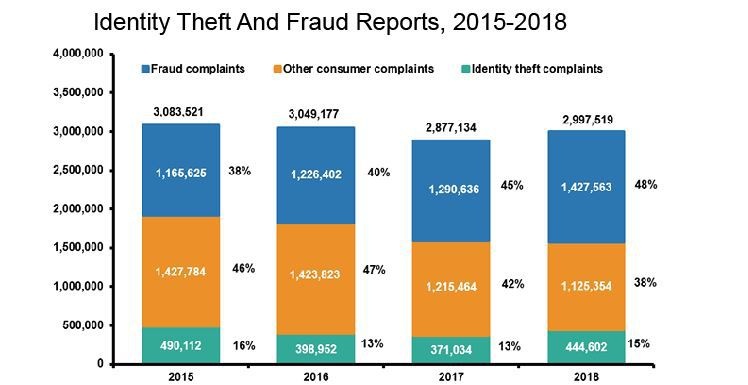
The Federal Trade Commission (FTC) maintains the Consumer Sentinel Network, which keeps track of consumer fraud and identity theft complaints that have been reported to federal, state, local, and private law enforcement authorities.1.4 million of the 3 million identity theft and fraud reports that were received in 2018 involved fraud, and 25% of those cases included allegations of financial loss. Consumers reported $1.48 billion in losses as a result of fraud complaints in 2018, an increase of $406 million from the previous year. In these circumstances, buyers spent $375 on average. Imposter schemes were the most often reported fraud kind, according to the FTC, and they also placed first among the top 10 fraud types. Identity theft claims fell from 2015 to 2018 by 9.3 percent, but began to increase again in 2018 and were up 19.8 percent from 2017 to 2018.
The blocking card does not require a battery.
To operate, it receives electricity from the scanner and immediately produces
a surround electronic environment known as an E-environment that makes all 13.56 MHz cards.
Hidden from the scanning.
The blocking card loses its power as soon as the scanner leaves its range.
Convenient
All 13.56mhz cards that are in the E-Field of this blocking card’s range will be secured, thus all you have to do is keep it in your wallet and money clip.

ÎNTREBĂRI FRECVENTE:
1. What is the difference between an RFID and an NFC blocker?
There’s no real difference between RFID and NFC blocking because they use the same technology, albeit NFC operates on a reduced range. Aluminum foil around a phone would block both RFID and NFC.
2. Do RFID-blocking wallets mess up my cards?
After multiple studies, there is no evidence that RFID-blocking wallets can damage credit cards. They are passive blockers, more like a shield or a Faraday cage for your cards. These wallets have been tested on both chip and stripe cards, and neither has shown any adverse effects.
3. Do RFID blocking cards work?
Yes. RFID blocking cards do work. They create a protective shield around your cards that prevents unauthorized scanners from recording and stealing information stored within the chips.
4. Is RFID blocking necessary?
If you’re at low risk or simply don’t use anything that has RFID in it, then you probably don’t need RFID protection. For low-risk people who still have cards, passports, or ID you’d prefer to keep under wraps, then investing in some protection could be worth that extra peace of mind to know you’re covered.


