


Product Introductie:
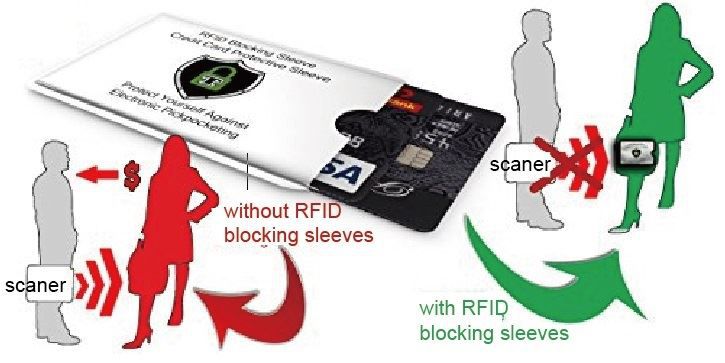
The RFID blocking passport sleeve is designed based on the Faraday cage principle. RFID communication is a wireless communication technology that uses electromagnetic alternating fields for signal transmission. This electromagnetic field propagates on the surface of the shielding sleeve that conforms to the Faraday cage principle and is “transparent” to the other side of the sleeve, However, no alternating electromagnetic field can be detected in the holding chamber of the shielding sleeve (because according to the Faraday cage principle, the internal potential is equal everywhere and there is no moving charge). Therefore, the RFID chip inside the shielding sleeve will not respond to external electromagnetic field communication, making it impossible for RFID devices to obtain card information even when they are close to the card in the shielding sleeve, effectively ensuring the information security of the card.
| Productparameters | |
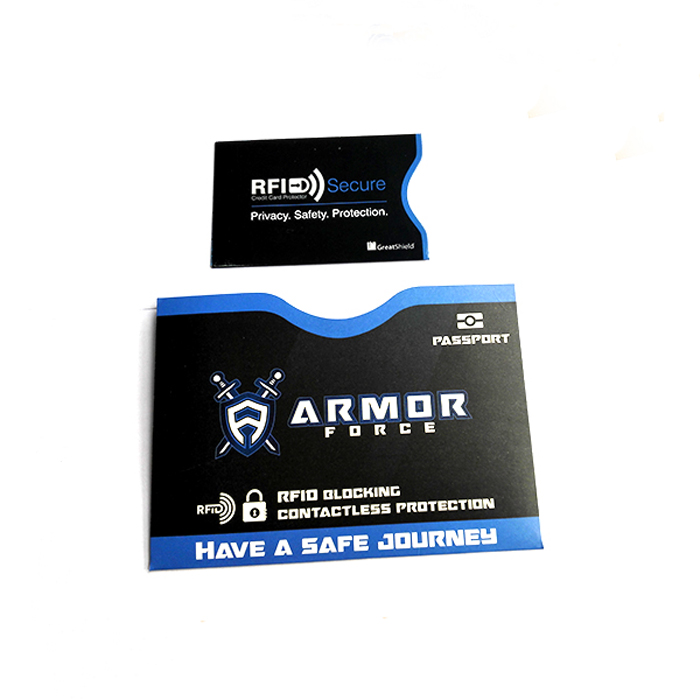
| Naam product | RFID-blokkerende paspoorthoes |
| Materiaal | Aluminium+papier |
| Kaartgrootte | 140*110mm |
| Gewicht | 6.2g |
| Afdrukken | Aangepast afdrukken in kleur |
| RFID-blokkeringstype | Kaart in de hoes plaatsen |
| Waterdicht | Ja |
| Anti-scheur | Ja |
| Bescherming | beschermt alle soorten 13.56MHz en 860-960MHz RFID contactloze kaarten (Schild RF-interface ISO14443, ISO15693 en EPC Gen 1/Gen 2 ISO18000); |
| Bedrijfstemperatuur | -10℃ ~ 60℃ |
| Pakket | 1pcs/oppzak, 1000pcs/karton Afmetingen doos: 20*15*10cm GW: 7kg |
FAQ:
Kun je aanpassen voor klanten?
Ja, we kunnen aanpassen als uw behoefte, we hebben R & D-afdeling, onze ontwerpers kunnen het ontwerp voor u en onze technici maken prototype.
Hoe kan ik u betalen?
Na het direct online plaatsen van de bestelling, vragen we je om te betalen. T/T (HSBC bank) en Paypal, Western Union zijn de meest gebruikelijke manieren die we gebruiken.
Hoe controleer je alle goederen in de productielijn?
We hebben steekproefsgewijze inspectie en inspectie van eindproducten. We controleren de goederen wanneer ze naar de volgende stap van de productieprocedure gaan.


