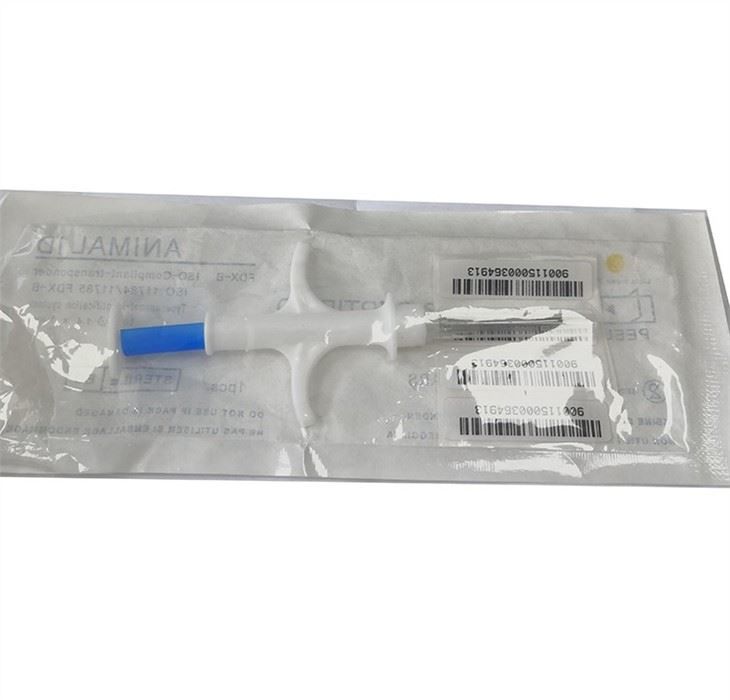

Traditional animal injections and health records are often tedious and manual, prone to misdiagnosis or injection errors, and require significant time and effort to track the health of each animal. However, this new generation of RFID animal syringes has completely changed the traditional way of management.
The syringe has several attractive features, the most notable of which is its fast and precise identification capabilities. When a veterinary nurse holds the syringe close to the animal’s body, the device instantly reads a tiny RFID chip implanted under the animal’s skin and matches the animal’s unique identification number with a veterinary database. This allows veterinarians to obtain animal details such as name, age, health history and injection schedule within seconds.
In addition to the quick recognition function, the syringe also enables automatic recording of injection data. Once the injection is completed, the system will automatically save key information such as date, time, drug type, and dosage with the animal identification code synchronously to form a complete health file. The accuracy and consistency of such records are greatly improved, helping the veterinary team to formulate more scientific and reasonable treatment plans, and to conduct follow-up evaluations when necessary.
For veterinary hospitals and animal management centers, this new generation of RFID animal syringes also brings convenience in batch management. When a large number of animals need to be injected, the device can quickly identify and record the information of each animal, improving work efficiency and reducing heavy manual work. This automated processing also saves the veterinary team a significant amount of time, allowing them to focus on critical medical care.
RFID (Radio Frequency Identification) animal syringe is a device that uses radio frequency identification technology to inject drugs or perform other related operations for animals. The following are the general steps to use RFID animal syringes:
Preparazione:
Assicuratevi di avere un animale con un chip RFID. Di solito si tratta di un piccolo microchip che viene impiantato sotto la pelle dell'animale.
Make sure you have an RFID animal syringe. This is usually a handheld device that has a needle or syringe port to inject the drug into the animal and can read information from an RFID chip.
Controllare la siringa:
Assicurarsi che la siringa sia carica (se si tratta di un dispositivo ricaricabile) o che siano installate batterie nuove (se si tratta di un dispositivo a batteria).
Controllare il display o la luce della siringa per verificare che sia funzionante.
Identificare gli animali:
Posizionare la siringa RFID per animali vicino al sito del chip sul corpo dell'animale.
Attivare la funzione di lettura RFID. Per farlo, è sufficiente premere un pulsante sul dispositivo o toccare lo schermo.
Quando l'iniettore legge con successo il chip RFID dell'animale, visualizza le informazioni rilevanti sull'animale, come il nome, il numero, ecc.
Per iniettare:
Determinare la dose di iniezione necessaria e il tipo di farmaco.
Inserire l'ago o la porta della siringa sotto la pelle dell'animale.
Premere o toccare il pulsante di iniezione sulla siringa per iniettare il farmaco nell'animale. Assicurarsi di seguire il dosaggio e il metodo di iniezione corretti.
Si noti che le diverse siringhe RFID per animali possono presentare alcune differenze, quindi è meglio leggere il relativo manuale d'uso o seguire le istruzioni fornite dal produttore prima dell'uso. Inoltre, è necessario usare cautela nell'uso delle siringhe RFID per animali e assicurarsi di avere una formazione e un'esperienza adeguate per garantire la sicurezza e il benessere dei propri animali. Se necessario, è possibile rivolgersi a un veterinario o a un professionista.
Prodotti correlati