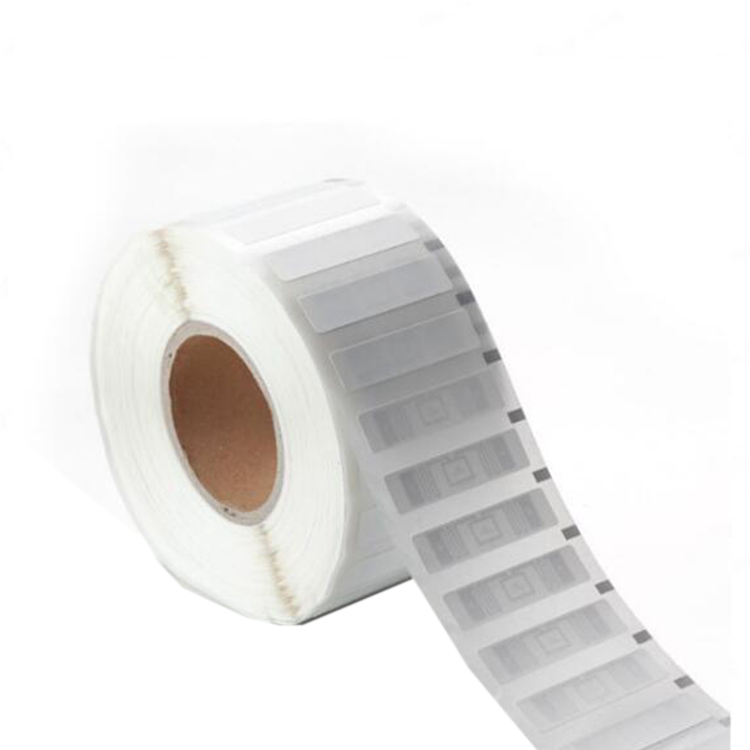
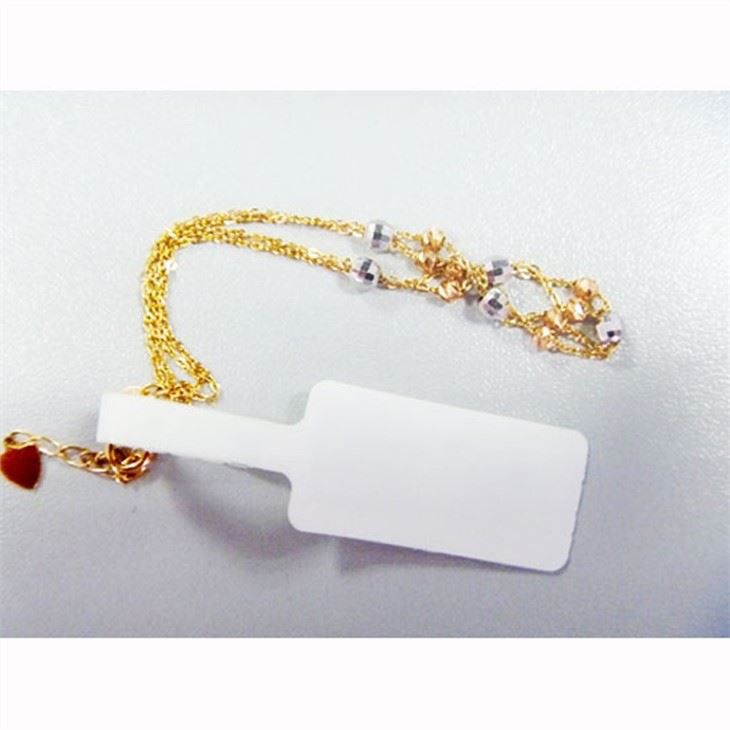
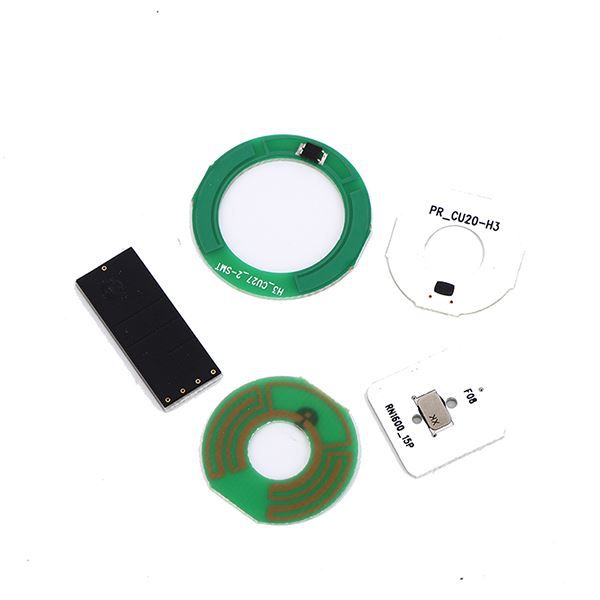
RFID (Radio Frequency Identification) is a wireless radio frequency identification technology that allows non-contact communication between electronic devices. The characteristics of this technology are fast, accurate, and do not require physical contact. The RFID system includes a reader and multiple devices called electronic tags. The reader emits radio frequency signals, which are received by the tag and converted into a response so that the reader can obtain information on the tag. Radio frequency identification technology can be divided into three categories based on the power supply method of its tags, namely passive RFID, active RFID, and semi active RFID.
1. Passive RFID.
Among the three types of RFID products, passive RFID has the earliest and most mature appearance, and its application is also the most extensive. In passive RFID, electronic tags receive microwave signals transmitted by RFID readers and briefly power themselves through electromagnetic induction coils to complete this information exchange. Due to the elimination of power supply systems, passive RFID products can reach a volume of centimeters or even smaller, and have a simple structure, low cost, low failure rate, and long service life. However, as a cost, the effective recognition distance of passive RFID is usually shorter and is generally used for close range contact recognition. Passive RFID mainly works in the lower frequency range of 125KHz, 13.56MKHz, etc. Its typical applications include: bus cards, second-generation ID cards, cafeteria meal cards, etc.
2. Active RFID.
Active RFID has not been popular for a long time, but it has played an indispensable role in various fields, especially in electronic toll collection systems on highways. Active RFID is powered by an external power source and actively sends signals to the RFID reader. Its volume is relatively large. But as a result, it has a longer transmission distance and higher transmission speed. A typical active RFID tag can establish contact with an RFID reader from a distance of 100 meters, with a reading rate of up to 1700 reads/sec. Active RFID mainly operates in higher frequency bands such as 900MHz, 2.45GHz, and 5.8GHz, and has the ability to recognize multiple tags simultaneously. The long-range and high efficiency of active RFID make it essential in some RF identification applications that require high performance and a wide range.
3. Semi active RFID.
Passive RFID itself does not provide power, but the effective recognition distance is too short. The active RFID recognition distance is long enough, but it requires an external power supply and has a large volume. And semi-active RFID is a compromise product for this contradiction. Semi active RFID, also known as low-frequency activation trigger technology. Under normal circumstances, semi-active RFID products are in a dormant state, only supplying power to the portion of the tag that maintains data, resulting in lower power consumption and the ability to maintain it for a longer period of time. When the tag enters the recognition range of the RFID reader, the reader first accurately activates the tag in a small range with a 125KHz low-frequency signal to enter the working state, and then transmits information to it through 2.4GHz microwave. That is to say, first use low-frequency signals for precise positioning, and then use high-frequency signals to quickly transmit data. Its typical application scenario is to install multiple low-frequency readers at different positions in a large range that can be covered by a high-frequency signal to activate semi-active RFID products. This not only completes the positioning, but also enables the collection and transmission of information.
With the continuous improvement and popularization of mobile computing technology, the development trend of RFID reader design and manufacturing will be towards multifunctionality, multiple interfaces, multiple standards, and towards modularization, miniaturization, portability, and embedded; Meanwhile, multi reader coordination and networking technology will become one of the future development directions.
Produits apparentés