

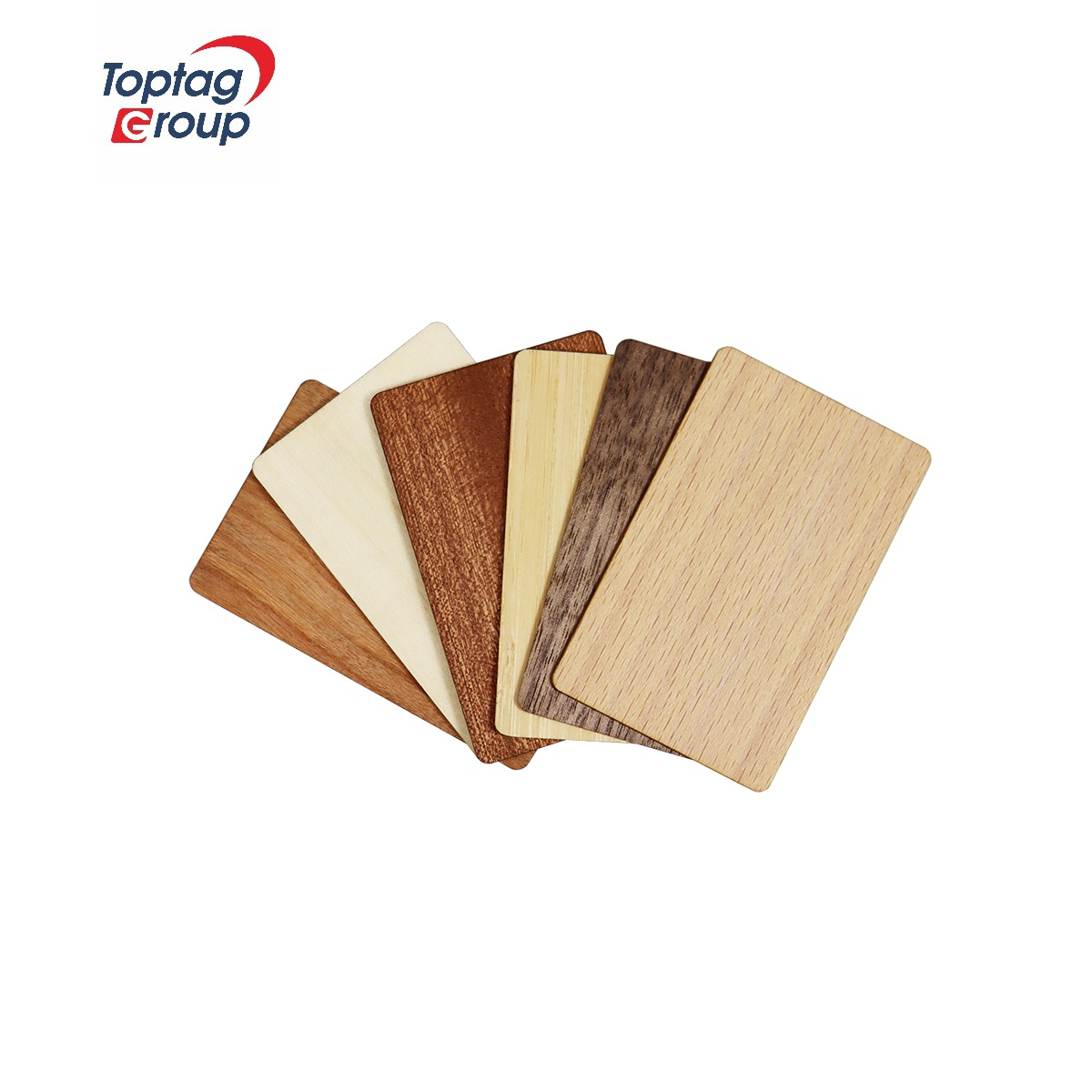
An RFID smart card is designed to identify a person, verify their credentials, or authorise a transaction via wireless communication between an embedded chip and an RFID reader. The main purpose of an RFID smart card is to make access control, cashless payments, public transport, employee identification, and other identity-based services faster and more convenient, all the while supporting secure data storage and verification. According to the National Institute of Standards and Technology (NIST), RFID systems are used for access control and automated payments. The Secure Technology Alliance further explains that contactless smart cards can support security functions such as encryption and mutual authentication.
What Is an RFID Smart Card?
. RFID smart card is a contactless identification card containing an integrated circuit (IC) chip and an antenna. Rather than requiring physical contact with a reader, the card communicates via radio-frequency signals when brought within the reader’s operating range. Depending on the design of the card, the chip may store identification data, process commands, authenticate the reader, or perform cryptographic operations before allowing the system to complete a transaction.
While the term ‘RFID smart card’ is often used broadly, it is important to distinguish it from a basic RFID tag. A simple Štítek RFID can only transmit a fixed identifier or limited stored information. By contrast, a smart card can incorporate more sophisticated chip functions, including access authentication, secure data handling, and transaction processing. The Secure Technology Alliance highlights this distinction: contactless smart cards are generally designed for short-range communication and can support stronger security capabilities than many RFID tags, which are primarily used for tracking goods.
Most contactless smart cards used for access control, transit, and payment operate at 13.56 MHz and adhere to standards such as ISO/IEC 14443. However, not every RFID card uses the same frequency, protocol, memory architecture, or security features. The correct specification depends on the reader infrastructure and the application that the card is intended to support.

How Does an RFID Smart Card Work?
An RFID smart card exchanges data wirelessly with a compatible reader. In many common contactless card systems, the card is passive, meaning it does not require an internal battery as it receives operating energy from the electromagnetic field generated by the reader. When the card enters this field, its antenna couples with it, powering up the chip and enabling communication.
A typical transaction follows several stages:
- Reader activation: The RFID reader generates a radio-frequency field and waits for a compatible card to enter its operating area.
- Card detection: The card’s antenna receives energy from the reader and activates the integrated circuit, where applicable.
- Communication setup: The reader and card establish communication using a supported protocol. Anti-collision procedures may be used when multiple cards are presented.
- Data exchange and authentication: The reader sends commands, and the card responds with the required information or performs an authentication procedure. Depending on the chip and system, this may involve cryptographic challenge-response rather than simply transmitting a card number.
- System decision: The connected access-control, payment, or management system checks the credential and applies its authorization rules.
- Transaction result: The system grants or denies access, records attendance, deducts a fare, or completes another permitted operation.
The card itself does not necessarily make the final authorization decision. In many deployments, it supplies a credential or participates in authentication, while the reader and backend system determine whether the user has permission to enter a facility or complete a payment. This distinction is important when designing a reliable RFID smart card system: card technology, reader compatibility, software configuration, and credential management all affect the result.
What Is the Main Purpose of an RFID Smart Card?
The central purpose of an RFID smart card is to provide a convenient and controlled way to identify users and authorize specific activities. By replacing manual identity checks, physical keys, paper tickets, and some traditional payment processes, it helps organizations manage access and transactions more efficiently.
Its practical purposes can be grouped into several major categories.
- Access Control and Identity Verification
One of the most common uses of RFID smart cards is to control access to buildings and restricted areas. Employees, visitors, students, and authorised contractors can use their cards to access offices, factories, laboratories, residential buildings, car parks, and other secure locations.
An access control system can associate each card with a specific user profile and permission level. For instance, an employee may be authorised to enter the main office and production area, but not the server room or restricted storage facility. Administrators can assign, modify, or revoke permissions via the management system, eliminating the need to collect and replace conventional keys.
For organisations with many users or multiple facilities, this approach also simplifies identity administration. Lost cards can be deactivated and new credentials issued, while access records can be reviewed in accordance with the organisation’s security and privacy policies.
- Cashless Payments and Stored-Value Transactions
RFID smart cards are also used to support contactless payment and stored-value services. A card may be linked to a bank account, payment application, or prepaid balance, depending on the system architecture. Users can present the card to a compatible terminal to complete a transaction without inserting it into a slot or handing it to a cashier.
Common examples include contactless bank cards, campus payment cards, employee meal cards, vending-machine cards, and prepaid service cards. In public transport, a card may store a balance or use a backend account to calculate fares. NIST’s RFID security guidance identifies automated payment, including transit fare collection and retail transactions, as an established RFID application.
The payment function depends on the card’s chip, transaction protocol, reader, and payment infrastructure. A basic RFID identification card should not be assumed to support secure financial transactions simply because it can be read wirelessly.
- Public Transportation and Fare Collection
Contactless smart cards are used by public transport operators to streamline passenger journeys and fare collection. Passengers simply tap their cards at gates or validators when entering or leaving a station, boarding a bus or using another supported transport service.
The system can then validate the card, calculate the fare, update the stored balance, or record the journey against a central account. Compared with paper tickets and manual fare handling, contactless cards reduce transaction friction and support more efficient passenger processing, particularly at busy stations and transport hubs.
- Employee Attendance and Workforce Management
In workplaces, RFID smart cards can be used to record employee entry and exit times. When an employee presents a card to a time-attendance terminal, the system records the event and associates it with the employee’s account.
This information can support attendance reporting, shift management, payroll workflows, and workforce administration. However, an attendance record is not automatically proof that an employee worked throughout the recorded period. Organizations should define appropriate policies for missed scans, shared credentials, remote work, and corrections to attendance data.
- Membership, Loyalty, and Customer Identification
Retailers, hotels, gyms, universities, and service providers can use RFID smart cards to identify members and link them to their customer accounts. These cards can help staff to retrieve membership status, verify eligibility, apply loyalty benefits and manage access to facilities.
For instance, a fitness club could use a card to validate membership at the entrance, while a hotel could use a contactless credential to grant guests access to specific rooms or facilities. The exact functions depend on how the card is integrated with the organisation’s membership or property management software.
Common RFID Smart Card Applications
The same basic contactless technology can serve different business purposes, but each has its own uses.
| Aplikace | Typical purpose | Common system functions |
| Office and building access | Verify identity and control entry | User authentication, access permissions, entry logs |
| Public transportation | Validate passengers and collect fares | Fare calculation, stored value, journey records |
| Banking and payments | Support contactless financial transactions | Payment authentication, transaction authorization |
| Employee attendance | Record workforce attendance events | Clock-in/out, shift records, attendance reports |
| Education and campus services | Identify students and staff | Library access, campus entry, cafeteria payments |
| Hotels and hospitality | Manage guest and staff access | Room access, facility permissions, guest identification |
| Membership and loyalty | Recognize registered customers | Membership validation, rewards, account lookup |
| Healthcare facilities | Support staff identification and controlled access | Department permissions, staff authentication, access logs |
The table describes common application patterns rather than guaranteed functions of every RFID smart card. For example, a card designed for building access may not have the chip architecture, certification, or payment credentials required for banking applications.
What Are the Main Components of an RFID Smart Card?
An RFID smart card combines several components that work together to support wireless communication and data processing. Understanding these components helps buyers compare card specifications and determine whether a product is suitable for a particular reader system.
- Integrated Circuit Chip
The integrated circuit is the card’s core electronic component. It stores data and, depending on the chip type, can execute commands, manage memory access, and perform security operations. Basic memory cards may provide limited data storage, while microprocessor-based smart cards can support more advanced applications, including cryptographic authentication.
- Embedded Antenna
The antenna enables the card to communicate with the RFID reader. In common passive contactless cards, it receives energy from the reader’s electromagnetic field and exchanges radio-frequency signals with the reader. Antenna design, card construction, and the surrounding environment can affect communication reliability.
- Card Body and Protective Layers
The card body typically protects the chip and antenna while providing a suitable surface for printing. PVC is widely used, while PET, PETG, polycarbonate, and other materials may be selected for specific durability, environmental, or security requirements. The choice should consider card thickness, flexibility, expected service life, printing method, and exposure to heat, moisture, or mechanical wear.
- Reader and Backend System
Although they are not physically part of the card, the reader and backend platform are essential to the overall system. The reader communicates with the card, while the connected software checks credentials, manages permissions, records events, and connects with other business systems. A card’s practical value therefore depends on the complete system rather than the card alone.

RFID Smart Card Types and Technology Standards
RFID smart cards can be categorised by operating frequency, communication protocol, chip architecture, and intended application. It is essential to choose the correct category because cards that are physically similar may still be incompatible with their readers.
High-frequency (HF) contactless cards operating at 13.56 MHz are common for many access control, payment, and transit applications. ISO/IEC 14443 defines the interface for proximity contactless cards, while ISO/IEC 15693 addresses vicinity cards. However, these standards are not interchangeable labels for all RFID products; they define different communication characteristics and intended operating conditions.
| Card technology or standard | Main characteristics | Typical applications |
| ISO/IEC 14443 | 13.56 MHz proximity contactless interface; commonly used for short-range card-reader communication | Transit, access control, payment, identification |
| ISO/IEC 15693 | 13.56 MHz vicinity card technology, generally designed for a greater operating distance than proximity cards | Identification, library and asset-related applications |
| MIFARE-based cards | A family of contactless IC products with different memory, security, and protocol capabilities | Public transport, campus systems, access control |
| Dual-interface smart cards | Combine contact and contactless interfaces in one card | Banking, identity credentials, multi-purpose systems |
| UHF RFID cards | Operate in ultra-high-frequency systems and may support longer read distances, depending on design and regulations | Vehicle identification, logistics, selected tracking applications |
A crucial purchasing consideration is that matching the frequency alone does not guarantee compatibility. The card and reader must also support the appropriate protocol, chip technology, security configuration, and application-level commands. For example, two 13.56 MHz cards may use different chip families or authentication methods and therefore may not work with the same access-control system.
Security Benefits and Limitations of RFID Smart Cards
Security is a key reason why organisations opt for smart cards over basic identification tags. Depending on the chip and system design, an RFID smart card can support functions such as mutual authentication, encrypted communication, secure memory access and cryptographic operations. These functions help to reduce the risk of unauthorised reading, credential duplication and data manipulation.
However, ‘RFID’ does not automatically mean ‘secure’. The level of protection varies significantly between card technologies. Some low-cost cards transmit a fixed identifier that can be copied or replayed under certain conditions. More advanced cards can use cryptographic protocols, diversified keys, and transaction-specific authentication; however, these protections must be correctly implemented and managed.
NIST Special Publication 800-98, ‘Guidelines for Securing Radio Frequency Identification (RFID) Systems’, explains that the security risks and available controls of RFID systems vary according to their components and how they are implemented. The publication recommends considering security and privacy throughout the design, deployment, and operation of the system.
Organizations evaluating RFID smart card security should consider the following:
- Authentication method: Determine whether the card uses a fixed identifier, password-based access, mutual authentication, or cryptographic challenge-response.
- Data protection: Check whether sensitive information is encrypted or protected against unauthorized access and modification.
- Key management: Establish how cryptographic keys are generated, stored, diversified, updated, and revoked.
- Lost-card response: Ensure administrators can deactivate compromised or missing credentials promptly.
- Reader and network security: Protect readers, controllers, backend databases, and communication links instead of relying solely on card-level security.
- Privacy controls: Limit the collection and retention of personal data and define who can access transaction or movement records.
A secure card is only one part of a secure identification system. Weak reader configuration, shared credentials, exposed encryption keys, or poorly protected backend software can undermine otherwise capable card technology.
How to Choose the Right RFID Smart Card?
Selecting an RFID smart card should begin with the application and the existing infrastructure, not simply the card’s price or appearance. A card that works well for basic employee identification may be unsuitable for payment processing or high-security access control.
Before placing an order, buyers and system integrators should evaluate these factors:
- Application requirements: Define whether the card will be used for access control, attendance, payment, transport, membership, or multiple functions.
- Reader compatibility: Confirm the reader’s supported frequency, standard, protocol, chip family, and authentication method.
- Chip and memory configuration: Determine whether the application needs a simple identifier, writable memory, secure storage, or a microprocessor-based chip.
- Security level: Specify the required encryption, authentication, key-management, and credential-revocation capabilities.
- Card material and durability: Select a suitable body material, thickness, finish, and printing method for the expected usage environment.
- Customization: Check requirements for logos, serial numbers, barcodes, QR codes, photographs, numbering, and other visual identifiers.
- System integration: Confirm that the card can work with the access-control, attendance, payment, or management platform already in use.
- Testing and certification: Request samples and verify performance with the actual readers and software before approving mass production.
For bulk procurement, it is also useful to confirm production lead time, minimum order quantity, encoding services, quality inspection procedures, and replacement arrangements. If cards will be issued across multiple locations, consistent chip configuration and credential management are particularly important.
RFID Smart Card vs. Traditional Magnetic Stripe Card
Both RFID smart cards and magnetic stripe cards provide a means of identifying users or supporting transactions, but they use different communication and data technologies. Magnetic stripe cards store information in magnetically encoded tracks that must pass through a compatible reader. In contrast, an RFID smart card communicates wirelessly via an embedded chip and antenna.
Depending on its chip architecture, a contactless smart card can offer more advanced capabilities, including secure authentication and on-chip processing. It also eliminates the need for the physical swiping motion required by magnetic stripe systems. However, the level of security and functionality depends on the card specification and system implementation; not all RFID cards provide the same level of protection.
When upgrading an older identification or payment system, organisations should consider reader replacement, software compatibility, credential migration, user convenience, security requirements and total deployment cost. A technology upgrade is most effective when the card, reader, back-end platform and operational policies are designed as an integrated solution.
Where Is RFID Smart Card Technology Heading?
RFID smart cards are increasingly becoming part of broader digital identity and connected-service ecosystems. Rather than functioning only as standalone identification credentials, modern card systems can connect with centralized access-management platforms, mobile applications, visitor-management software, payment services, and enterprise databases. This allows organizations to manage multiple services through a unified credential infrastructure.
One important development is the integration of physical cards with mobile credentials. Some access-control systems now allow users to authenticate through smartphones or wearable devices while retaining physical cards for people who need them. This creates more flexible credential options, but it also increases the importance of identity lifecycle management, device security, and consistent authentication policies.
Another direction is the use of stronger chip security and more sophisticated authentication methods. As RFID smart cards are adopted in applications involving financial transactions, personal identity, and restricted facilities, organizations increasingly need to consider encryption, secure key management, privacy protection, and interoperability. The long-term value of an RFID smart card therefore depends not only on its ability to communicate wirelessly, but also on how reliably it fits into a secure and maintainable digital system.
Frequently Asked Questions About RFID Smart Cards
- What is an RFID smart card used for?
An RFID smart card is used to identify users, authenticate credentials, and authorize activities through contactless communication with a compatible reader. Common applications include building access, public transportation, cashless payments, employee attendance, and membership management.
- How does an RFID smart card work?
The card uses an embedded antenna and chip to communicate with an RFID reader through radio-frequency signals. In many passive card systems, the reader supplies the energy needed to activate the chip, which then exchanges data or performs authentication.
- What is the difference between an RFID card and an RFID smart card?
A basic RFID card or tag may only transmit a fixed identifier or limited stored information. An RFID smart card can incorporate more advanced chip functions, such as secure memory access, encryption, and authentication, depending on its design.
- Are RFID smart cards secure?
RFID smart cards can support strong security features, including cryptographic authentication and encrypted communication, but the level of protection depends on the chip and system configuration. Organizations should also secure readers, backend systems, encryption keys, and card-issuance procedures.
- What is the reading distance of an RFID smart card?
The reading distance depends on the frequency, antenna design, card technology, reader power, and surrounding environment. Many ISO/IEC 14443 contactless smart cards are designed for close-range operation, typically within a few centimeters, rather than long-distance tracking.
- Can one RFID smart card support multiple functions?
Yes. A properly designed and configured smart card can support multiple applications, such as building access, employee identification, attendance, and cafeteria payments. However, the chip, security architecture, reader infrastructure, and backend software must all support the intended functions.
Závěr
Both RFID smart cards and magnetic stripe cards provide a means of identifying users or supporting transactions, but they use different communication and data technologies. Magnetic stripe cards store information in magnetically encoded tracks, which must pass through a compatible reader. In contrast, an RFID smart card communicates wirelessly via an embedded chip and antenna.
Depending on its chip architecture, a contactless smart card can offer more advanced capabilities, including secure authentication and on-chip processing. It also eliminates the need for the physical swiping motion required by magnetic stripe systems. However, the level of security and functionality depends on the card specification and system implementation; not all RFID cards provide the same level of protection.
When upgrading an older identification or payment system, organisations should consider reader replacement, software compatibility, credential migration, user convenience, security requirements and total deployment cost. A technology upgrade is most effective when the card, reader, back-end platform and operational policies are designed as an integrated solution.